Plastic Lunch Boxes and Food Containers: Common Moulding Problems and Practical Ways to Solve Them
Plastic lunch boxes look simple.
A lid, a container, a few clips—and sometimes a silicone seal.
But anyone who has developed a lunch box or food container knows that these products can create surprisingly difficult injection-moulding problems.
The challenge is not just producing a plastic box.
The challenge is producing two parts that continue to fit, seal and function properly after cooling, repeated washing and thousands of opening and closing cycles.
Here are some of the most common problems.
1. Lid and Container Do Not Fit Properly
This is probably one of the biggest challenges.
The container and lid may both be within their individual dimensional tolerances, but when assembled, they can still be too loose or too tight.
The reason is often tolerance stack-up combined with material shrinkage and warpage.
A large, thin-walled plastic part does not necessarily shrink uniformly. Corners, ribs, thicker sections and areas around clips cool at different rates.
Practical solution
Instead of designing the lid and container as completely independent parts:
Control the critical mating dimensions as an assembly.
Avoid unnecessary thickness changes around the sealing perimeter.
Keep wall thickness as uniform as possible.
Consider measuring the actual moulded parts before finalizing the mating dimensions.
For large containers, the sealing geometry should be treated as a critical functional interface, not simply another plastic edge.
2. Warpage Makes the Box Rock or the Lid Leak
A container may look acceptable when removed from the mould but sit unevenly on a table.
Or the lid may seal on three sides but leave a gap at one corner.
This is usually related to differential cooling, non-uniform wall thickness or residual stress.
Long, flat plastic surfaces are particularly vulnerable.
Practical solution
Avoid solving warpage simply by making the walls thicker.
Thicker walls can increase cooling differences and create new problems.
Instead:
Maintain relatively uniform wall thickness.
Use ribs intelligently rather than increasing the entire wall thickness.
Avoid heavy rib intersections.
Consider the direction of polymer flow.
Balance the cooling system in the mould.
Sometimes a small draft or controlled curvature can make a large flat surface much more stable.
3. Snap Fits Break After Repeated Use
A lunch box may work perfectly when new.
Then, after repeated opening and closing, the snap starts cracking.
This is often a material and geometry problem, not simply a moulding problem.
A sharp internal corner in a snap feature can become a stress concentrator. A stiff material may also have insufficient fatigue resistance for a flexible clip.
Practical solution
The snap feature should be designed around:
expected deflection
strain at the root
fatigue performance
material flexibility
operating temperature
Generous radii at the base of the snap are usually essential.
And importantly: do not select material only based on appearance or price.
A lunch box used in a freezer, dishwasher or microwave may experience very different temperatures during its life.
Matching resin to the real operating environment, not just the spec sheet, is exactly the kind of detail our injection molding capabilities are built around.
4. The Silicone Seal Does Not Stay in Place
A common food-container problem is the gasket.
The seal may:
fall out during washing
twist during assembly
stretch
become difficult to install
fail to seal consistently
The problem can come from the groove design, gasket tolerance or assembly process.
Practical solution
The gasket groove should be designed as a functional retention feature.
Consider:
gasket compression
groove depth
groove width
corner geometry
installation method
Sharp corners can cause a gasket to bunch or twist. A very tight groove can make assembly difficult, while an oversized groove may allow movement.
5. Sink Marks Around Ribs and Screw Features
Lunch boxes and containers often include:
reinforcement ribs
hinge features
clip locations
handles
thick structural sections
These features can create sink marks visible on the external surface.
The common mistake is making every rib thick because “more plastic means stronger.”
Unfortunately, thick intersections cool more slowly and can pull the visible surface inward.
Practical solution
Use ribs to add stiffness without creating excessive local thickness.
The relationship between the main wall and rib thickness must be considered carefully.
Sometimes multiple thinner ribs provide better structural performance than one very thick rib.
6. Food Containers Must Survive Real Life
A product can pass the dimensional inspection and still fail in the customer's kitchen.
The actual environment matters.
A lunch box may be:
frozen
filled with hot food
microwaved
placed in a dishwasher
dropped
repeatedly opened and closed
These conditions should influence both material selection and testing.
A material that performs well at room temperature may become brittle at low temperature or distort under heat.
The Mould Is Part of the Product Design
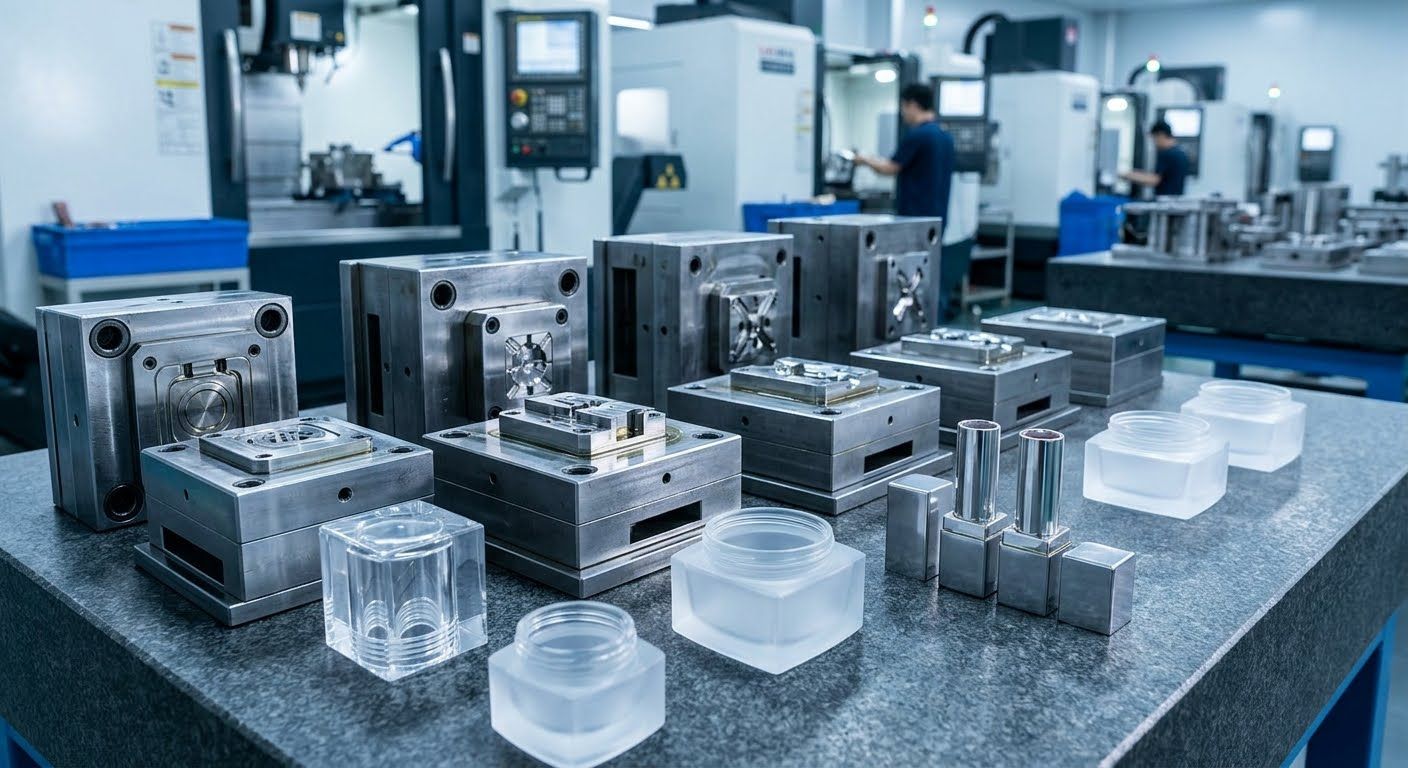
One of the biggest mistakes in consumer-product development is treating the injection mould as something that comes after the design is complete.
For products like lunch boxes, the moulding process directly influences how the product fits and functions.
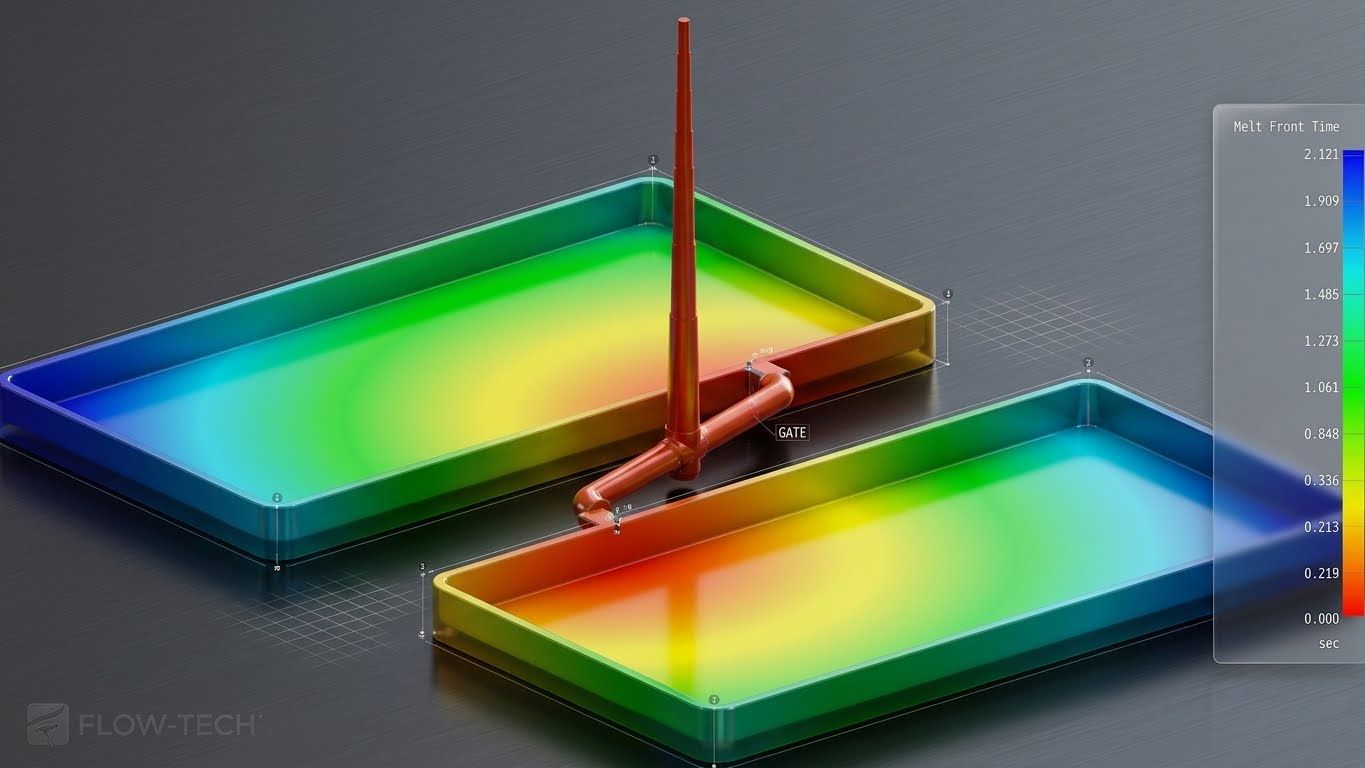
Gate position, cooling, shrinkage, ejection and material flow can all affect:
lid fit
sealing performance
flatness
appearance
clip performance
That is why prototype parts and early mould trials are extremely valuable.
Final Thought
A good lunch box is not just a plastic box with a lid.
It is an assembly of interacting components that must continue to work after thousands of cycles and under changing temperatures.
The difference between a product that looks good in the first sample and a product that works reliably in real life often comes down to understanding these small details early.
Fortunately, HongYing has already worked on plastic consumer-product and moulding projects where the real challenge was not simply making the mould, but understanding how the product would actually behave after moulding and during use.
If you are developing a plastic lunch box, food container or similar consumer product, getting the product and mould engineering right from the beginning can save expensive modifications later.